


How to Handle Rental Property Maintenance Requests
Table of Contents
Last Updated: September 13, 2026
What Counts as a Maintenance Request (And Why the Definition Matters)
A rental property maintenance request is any formal notification from a tenant that something in the unit needs repair, replacement, or attention.
Not every complaint is a repair request. A noisy neighbor is a nuisance issue; a dripping faucet is a maintenance request. Mixing categories creates confusion, delays, and legal exposure.
A maintenance request describes a condition affecting the unit's function, safety, or habitability; a service request is broader (parking passes, amenity access). Treating every message the same produces messy records and slow responses.
The clock starts the moment a request comes in: response time laws, lease obligations, and habitability standards all hinge on when a landlord was properly notified. If your intake process doesn't separate a dripping faucet from a noise complaint, you can't prove you responded appropriately to either.
Emergency vs Routine Maintenance: A Triage Framework
Emergency maintenance involves conditions that threaten health, safety, or cause active property damage; routine maintenance covers everything else. The line determines how fast you must act.
A simple framework: if waiting 24 hours would cause harm, property damage, or make the unit uninhabitable, treat it as an emergency. If it can wait until business hours without worsening, it's routine.
What falls into each bucket:
Emergency repairs:
No heat in winter or no cooling in extreme heat
Burst pipes, active water leaks, or flooding
Complete loss of electricity or gas
Sewage backup or toilet overflow affecting multiple fixtures
Broken exterior doors, windows, or locks that compromise security
Routine repairs:
Dripping faucets or slow drains
Appliance malfunction that doesn't affect habitability
Cosmetic damage to walls, floors, or fixtures
HVAC servicing when the system still runs
The nuance most owners miss: a broken refrigerator is an emergency if it's the unit's only cooling appliance; with a second refrigerator, it's routine.
The 4-Hour, 24-Hour, 72-Hour Triage Clock
Once classified, the triage clock sets your response window:
4-hour response: Emergencies. Acknowledge the request, dispatch a vendor, or provide a temporary fix within four hours.
24-hour response: Urgent but non-emergency issues. Schedule a vendor visit within one business day.
72-hour response: Routine requests. Acknowledge immediately, schedule within three business days.
"Response" doesn't mean the repair is finished, it means the tenant has confirmation that action is underway. That acknowledgment alone prevents most escalation.
The 7-Step Process for Handling a Repair Request
A repeatable process turns a chaotic inbox into a manageable workflow. Here's a common sequence for rental property maintenance requests, from first notification to final documentation.

Receive the request through your designated channel (tenant portal, phone line, or email).
Log it as a work order with a unique tracking number.
Triage by urgency and category.
Assign a vetted vendor or handle it in-house.
Schedule with the tenant and confirm the appointment.
Complete the repair and collect documentation (photos, invoices, notes).
Close the loop with the tenant and update your maintenance log.
Step 1: Log the Request in a Work Order
Every request becomes a work order, no exceptions. It captures the date received, tenant description, unit number, category, priority, and assignee.
This is the most important habit in the process. A verbal request that never gets logged is one you can't prove you received; if a dispute arises, the work order is your documentation.
Step 2: Triage, Assign, and Schedule
Triage means deciding how urgent the issue is and who fixes it. A property manager with a vetted vendor list can assign most repairs within minutes, the key is vetting contractors for licensing, insurance, and responsiveness before they are needed.
Vetting should cover license verification, proof of insurance, references from other property managers, and a clear rate structure. Skip it and you're calling whoever answers first when a pipe bursts at 11 p.m.
Step 3: Close the Loop and Document the Repair
The repair isn't finished when the vendor leaves, it's finished when the tenant confirms resolution and you've filed the documentation.
Close the loop with a short message: "The repair was completed on [date]. Please confirm the issue is resolved." Then log the invoice, vendor notes, and photos. This record protects security deposit decisions and supports maintenance tracking.
Pro Tip Photograph every repair before and after, even minor ones. When a tenant disputes a security deposit deduction two years later, dated photos of a completed repair are worth more than any invoice.
Landlord Response Time Laws and Habitability Rules
Landlord response time laws vary by state, but the architecture is consistent: an implied warranty of habitability, a statutory duty to repair, and a tenant remedy when the landlord fails. Understanding the mechanism matters more than memorizing a number that changes by jurisdiction and lease.
The Implied Warranty of Habitability
Nearly every state recognizes an implied warranty of habitability, a non-waivable promise that the unit remains fit for human occupancy for the lease term, even if the lease is silent. Standards typically cover:
Heat during cold months (many states set a minimum indoor temperature, often in the 65-68°F range during daytime hours)
Running water and a functioning water heater
Working plumbing and sanitation, including a functioning toilet
Electricity and gas where the unit is served by them
Structural integrity, roof, walls, floors, and weather-tightness
Safety items such as smoke detectors and, in many states, carbon monoxide detectors
Pest and vermin control in most jurisdictions, with the landlord responsible for infestations not caused by tenant negligence
When a condition falls under habitability, the duty to repair is legally enforceable, not a customer-service nicety.
Tenant Remedies When a Landlord Fails to Repair
Remedies depend on the state, but common ones include:
Repair and deduct. The tenant pays for the repair and subtracts the cost from rent, usually capped (a common statutory cap is one month's rent, and some states limit how often the remedy can be used per year).
Rent withholding. The tenant places rent in escrow or withholds it until the repair is made. Many states require the tenant to notify the landlord in writing first and give a reasonable cure period.
Rent abatement. The tenant pays reduced rent proportional to the lost use of the unit.
Constructive eviction. In severe cases, the tenant vacates and argues the lease is terminated because the unit is uninhabitable.
Reporting to a local housing or code enforcement agency, which can issue violations and, in some jurisdictions, fines.
These remedies are why your documentation matters. If a tenant claims you failed to respond, the work order timestamp, vendor dispatch record, and tenant's written confirmation are your defense.
What 'Reasonable Time' Actually Means
No federal statute sets a national response window (hud.gov). Courts and state statutes interpret 'reasonable' by severity:
Emergencies (no heat in winter, no water, sewage backup, gas leak): often measured in hours, not days. Some states require acknowledgment within 24 hours and repair within 24-72 hours.
Urgent but non-emergency (a single non-functioning appliance, a slow drain): typically a few days to a week.
Routine (cosmetic, non-habitability): typically 14-30 days, depending on the state and the lease.
Your lease can set a stricter standard than the law. If you write '48-hour response to all requests' into the lease, you're contractually bound even if the state only requires 'reasonable' time. Many landlords create liability by promising faster service in marketing than they deliver.
Where to Find Your State's Rules
Every state publishes landlord-tenant statutes and, in most cases, a plain-language tenant rights guide through its attorney general's office or a housing agency. HUD also publishes habitability guidance for federally assisted housing, useful even for market-rate units. Before finalizing a lease or maintenance policy, read your state's statute and confirm the cure periods and remedy caps that apply.
Watch Out A lease clause that waives the implied warranty of habitability is void in nearly every state. Do not rely on a lease provision to limit your repair obligation below the statutory floor, it will not hold up, and it may be treated as evidence of bad faith in a dispute.
Practical Compliance Habits
Timestamp every request the moment it arrives, in writing.
Send a written acknowledgment within the response window your lease promises, even if the repair is scheduled later.
Document the cure, vendor invoice, completion date, and tenant confirmation.
Keep a habitability checklist for each unit and re-verify it at move-in and move-out.
Review your lease annually against your state's current statute, since cure periods and remedy caps change.
The goal isn't to memorize every state's timeline, it's to build a process that produces a defensible record every time, so a habitability dispute is answered by documentation before it's asked.
Landlord Maintenance Request Template (Free to Copy)
A consistent template keeps requests organized and creates a documentation trail. Copy and adapt this one:
Maintenance Request Form Date received: ___________ Tenant name: ___________ Property address / unit: ___________ Contact method: ___________ Description of issue: ___________ Location in unit: ___________ Priority (emergency / urgent / routine): ___________ Work order number: ___________ Assigned vendor: ___________ Scheduled date: ___________ Completion date: ___________ Tenant confirmation received: ___________ Notes / follow-up required: ___________
Send this form at move-in and link it in your tenant portal. When tenants know what information you need, requests arrive complete instead of requiring three follow-ups.
Watch Out Never accept maintenance requests only by verbal conversation. If a tenant calls and reports a leak, follow up with a written confirmation the same day. Without a written record, you have no proof of when you were notified, which is the exact fact that matters in a habitability dispute.
Property Management Maintenance Software That Actually Helps
Maintenance software earns its keep when it captures requests in one place, tracks response times, and stores documentation. If it doesn't do all three, you're paying for a prettier inbox.
What to look for:
Tenant portal where residents submit requests with photos
Work order tracking with status updates visible to tenants
Vendor management with assignment and scheduling tools
Maintenance log that exports for tax and insurance purposes
Automated reminders for preventive maintenance schedules
For one or two units, a shared spreadsheet plus a dedicated phone line can work. At three or more, coordination overhead usually justifies a real platform. The deciding factor isn't unit count alone, it's how many vendors and tracking steps you're juggling.
DIY vs Professional: A Decision Matrix for Repairs
Not every repair needs a contractor, and not every repair should be a DIY project. Use this matrix to decide:
Repair Type | DIY If... | Call a Pro If... |
Minor plumbing (clog, faucet) | You have basic tools and the issue is isolated | Water is leaking into walls or multiple fixtures |
Electrical | Never DIY beyond replacing a bulb or resetting a breaker | Any wiring, outlet, or panel work |
HVAC | You're changing a filter | System isn't heating or cooling |
Appliance repair | It's under warranty and you're handy | Gas appliances or sealed systems |
Cosmetic (paint, caulk) | You have time and the unit is vacant | Tenant is in place and prefers a pro |
Rule of thumb: if the repair involves gas, major electrical, structural work, or anything that could void a warranty, hire a licensed professional. Liability from a botched DIY repair far outweighs the savings.
Budgeting for Maintenance Reserves and Post-Repair Quality Assurance
Two things separate owners who sleep well at night from those who don't: a maintenance reserve fund and a quality assurance step after every repair. Both are unglamorous and both reliably protect cash flow and tenant relationships.
The Financial Math of a Maintenance Reserve
The reserve isn't a vague 'save some money' instruction, it's a calculated line item. A common approach uses two buckets:
Bucket 1, Routine maintenance reserve. Set aside a percentage of gross monthly rent for ongoing repairs, turnover touch-ups, and small vendor calls. A frequently cited range is 5-10% of monthly rent, higher for older properties and single-family homes (narpm.org). On a unit renting for $1,800 per month, that's $90-$180 monthly, or $1,080-$2,160 per year.
Bucket 2, Capital expenditure (CapEx) reserve. The big-ticket fund for roof, HVAC, water heater, flooring, and exterior painting. A common rule of thumb is 1-2% of property value per year, or estimate each system's remaining useful life and divide replacement cost by years left (narpm.org). For a $300,000 property, 1% is $3,000 per year, a figure many owners underestimate until the HVAC fails in July.
A worked example. Suppose you own a single-family rental valued at $300,000, renting for $1,800 per month. Your annual reserve target might look like:
Routine maintenance: 8% of $21,600 annual rent = $1,728
CapEx: 1.5% of $300,000 = $4,500
Total annual reserve target: $6,228, or about $519 per month
That number feels large until you compare it to a single emergency HVAC replacement, which commonly runs several thousand dollars. The reserve makes a failure an inconvenience, not a crisis.
Where to hold the reserve. Keep it in a separate, liquid account, a dedicated savings or money market account, not commingled with operating funds, so it's visibly earmarked and not spent in a slow month.
Adjusting the reserve. Recalculate annually. A property with a new roof and HVAC can lower its CapEx reserve for a few years; one nearing the end of its roof's life should raise it. The reserve is a moving target, not a fixed number.
Post-Repair Quality Assurance: Closing the Loop Properly
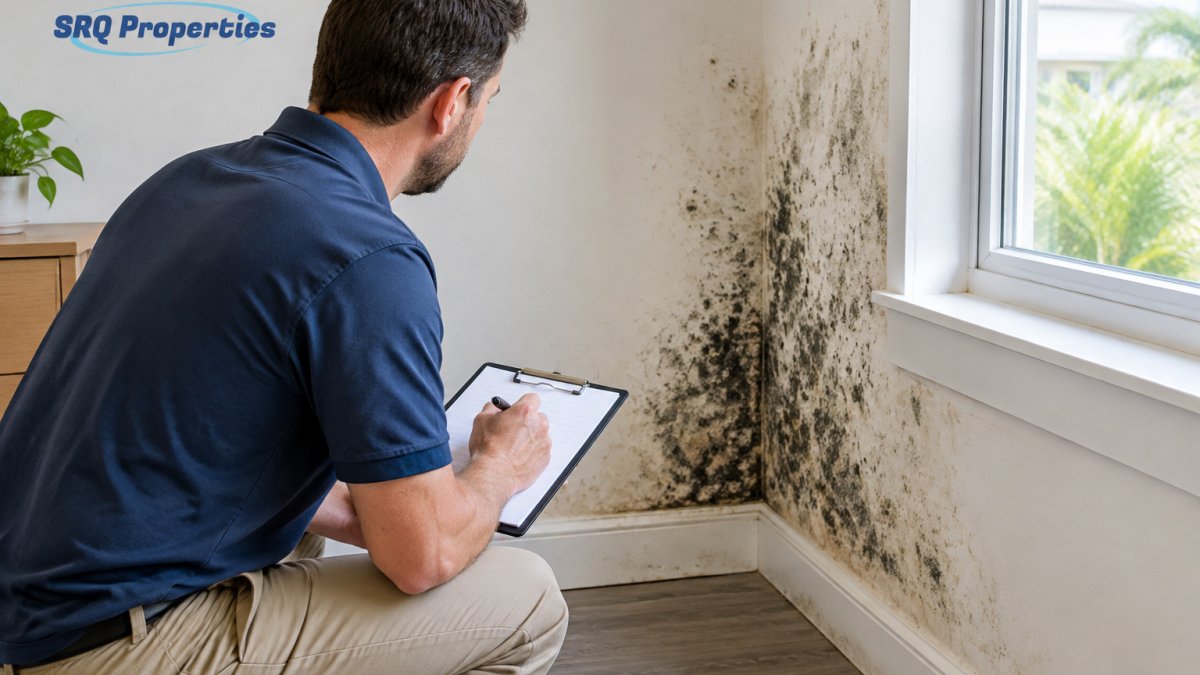
A repair isn't finished when the vendor drives away, it's finished when the tenant confirms resolution, the documentation is filed, and you've verified the work meets a basic standard. Skipping verification is how a 'fixed' leak becomes a mold problem three months later.
The 72-hour follow-up. Contact the tenant within 72 hours of completion and ask a specific question. 'Is the faucet still dripping?' gets a more useful answer than 'Is everything okay?' and surfaces a partial fix before it becomes a callback.
The visual verification. For any repair involving water, electrical, or structural work, inspect the area yourself or have your property manager do it. Look for:
Water stains, damp drywall, or new discoloration near a plumbing repair
Loose fittings, exposed wiring, or unfinished trim near an electrical repair
Proper sealing around windows, doors, or roof penetrations
Whether the vendor cleaned up and removed debris
The vendor scorecard. Track every vendor on three metrics: on-time arrival, repair held (no callback within 30 days), and positive tenant experience. A vendor who fails two of three across multiple jobs isn't worth keeping, regardless of price. This is how you build a vetted list that performs under pressure.
The written close-out. Send a short written confirmation: 'The repair was completed on [date] by [vendor]. Please confirm the issue is resolved.' A tenant reply, even a one-word 'yes', becomes part of the permanent record and shows good faith if the issue recurs.
Pro Tip Photograph every repair before and after, even minor ones. When a tenant disputes a security deposit deduction two years later, dated photos of a completed repair are worth more than any invoice. Store them in a folder named by unit and date so they are findable in seconds.
Why These Two Habits Compound
A reserve fund and a QA step reinforce each other. The reserve lets you fix a problem correctly the first time instead of patching it; the QA step catches the patch before it fails. Together they reduce emergency calls, extend the life of major systems, and build a documented history that supports rent increases, refinancing, and a higher sale valuation.
Owners who avoid maintenance emergencies aren't luckier. They budget for repairs before they happen, verify the work, and document everything, three habits that do more for profitability than any single tool.
Key Takeaway Run the reserve math on your own property this week: 5-10% of monthly rent for routine, 1-2% of value for CapEx. Then add a 72-hour follow-up to every completed work order. Those two changes alone will change how maintenance feels on your balance sheet.
Frequently Asked Questions
What is the 1% rule for property maintenance?
The 1% rule says you should set aside roughly 1% of your property's value each year for maintenance and repairs. On a $300,000 rental, that's about $3,000 annually, or $250 per month. It's a rough budgeting tool, not a legal requirement. Older homes, properties with aging HVAC or plumbing systems, and units with high turnover often need more. Pair the 1% rule with a separate capital expenditure reserve for big-ticket replacements like roofs and appliances so a single repair doesn't wipe out your cash flow.
How do you prioritize emergency vs routine maintenance requests?
Triage by threat to health, safety, and habitability. Anything involving gas leaks, no heat or AC in extreme temperatures, raw sewage, flooding, or a total loss of running water is an emergency and needs a response within hours. Urgent items like a broken refrigerator or a single non-functioning toilet should be handled within 24 to 48 hours. Routine requests such as a dripping faucet, a loose cabinet door, or a slow drain can be scheduled within 3 to 7 days. Put this framework in your lease so tenants know what to expect.
What are the legal requirements for landlord response times?
There is no single federal response-time law. Each state sets its own rules, and many states use a reasonableness standard tied to habitability. Some states, like Florida, require landlords to maintain habitable conditions and to act within 7 days of a written notice for certain repairs, with specific remedies if they don't. Always check your state statute and your lease agreement. Documenting every request, response, and repair protects you if a dispute ever reaches court or a tenant files a complaint.
How can property management maintenance software improve maintenance workflows?
Maintenance software gives tenants a portal to submit requests with photos, automatically creates work orders, and routes jobs to your preferred vendors. It timestamps every step, which is powerful documentation if a tenant claims you ignored a repair. Most platforms also track vendor performance, cost history per unit, and preventive schedules for HVAC filters and inspections. For owners with 1 to 2 units, a shared inbox and a spreadsheet can work, but once you pass 3 or 4 doors, software usually pays for itself in saved time and avoided disputes.
Comments